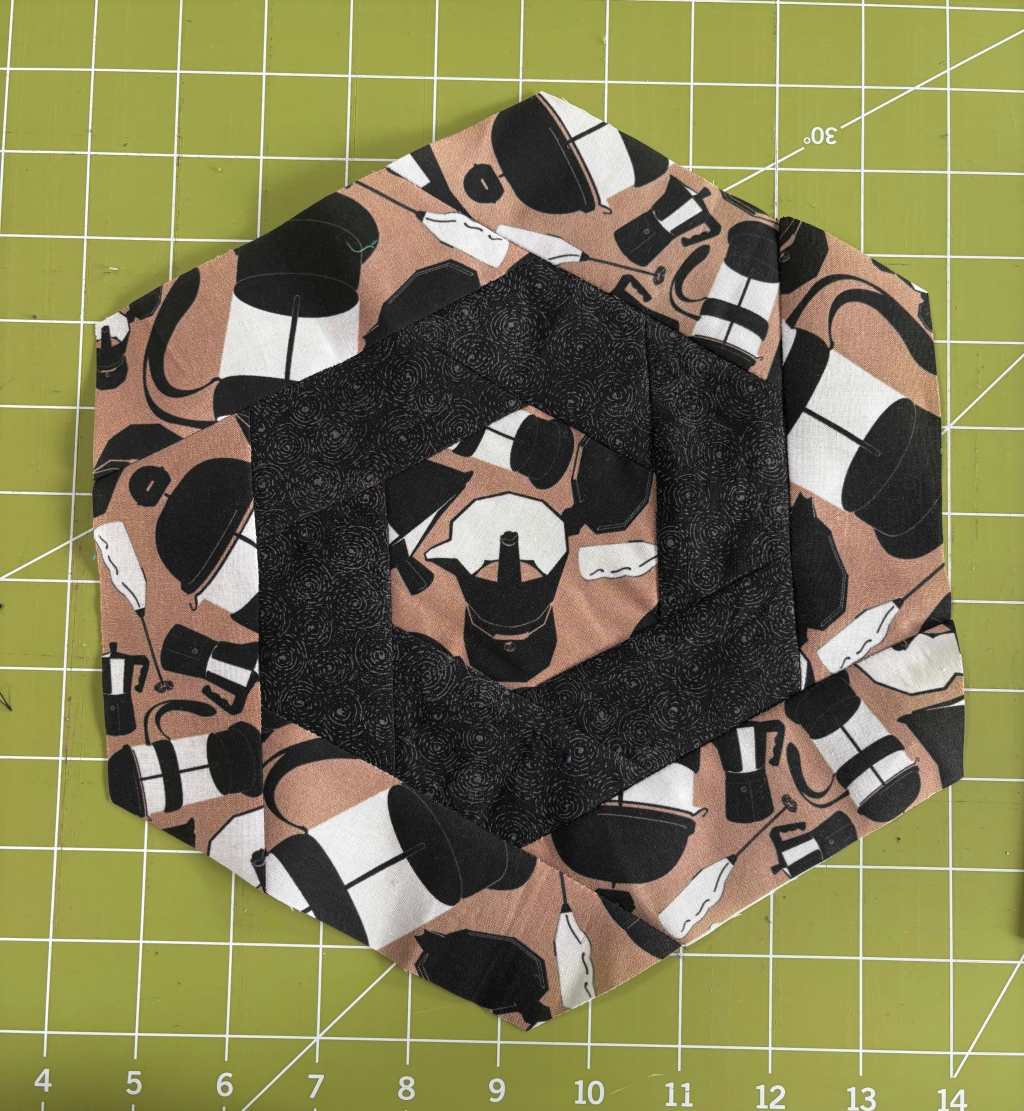
It’s spring, and if I start now I may have a new quilt by the time cool weather returns to the Northern Hemisphere.
Quilt project goals:
- collaborate with and learn from more experienced quilters
- create a quilt suitable for keeping my lap warm while reading, knitting, or being squished flat by the cat
- buy no new cloth for this project (scraps and stash only)
- increase precision with rotary cutter and sewing machine
- cultivate design variety within a unified quilt block pattern (aka manipulate color and pattern such that the same structure varies significantly in appearance)
- revel in the inevitability of being a millennial who has a weakness for hexagonal tile patterns
Unresolved design challenges:
- Will I have to buy cotton batting for this quilt, or can I repurpose old sheets? (research by asking experienced quilters and/or attempting a mini quilt)
- Can I provide sufficient guidance to result in uniformly sized quilt blocks from all involved?
- Should I have limited the color range?
- Can I develop a contingency plan for something like a unified border between each block to compensate for uneven dimensions or inharmonious colors?
- Hexagonal tiles do not result in a rectangular pattern unless cropped. Am I better off with a quilt with scalloped edges or filler pieces?
Inspiration:
I have in the past made coasters and potholders in a hexagonal log cabin design like this one by Caroline Fairbanks. Her process of sewing rectangular strips to a hexagon center and trimming them to the right angles worked far better for me than trying to cut every piece to the precise trapezoid shape and sewing it perfectly.
What I’m doing different is using the patchwork to make a quilt instead of potholders. There is nothing wrong with the hexagon template she provides on that page, but I found it easier to make a template in the size I wanted by using a compass and some scrap cardstock.
I have wanted to use tiling hexagons in enough designs to feel rather comfortable using a compass to inscribe one within a circle.
Before settling on this hexagonal quilt block plot I spent ages looking at quilts on the Quilt Index. The sunshine and shadows approach to log cabin quilts stood out to me aesthetically. I reluctantly decided it would be an unlikely effect to achieve within a remote collaboration. For the same reason, I rejected the temptation to attempt a Penrose tile quilt. I love the idea of an aperiodic pattern on a quilt, but I suspect the effect’s success relies heavily on a unified color scheme. (The aperiodic monotile recently developed is also conceptually exciting but the concave angles would be a nightmare to sew. Perhaps I could do it with the eight kites into which the monotile can be subdivided…but not for this project.)
Hexagon log cabin quilt block process: the central hexagon template
Unless you’re printing one out, it might be easiest to control the size by drafting a hexagon in a circle. The length of each side of the hexagon will equal that of the circle’s radius.
In the next post on this topic I will mention some what I needed to learn to level up my precision with this quilt block.
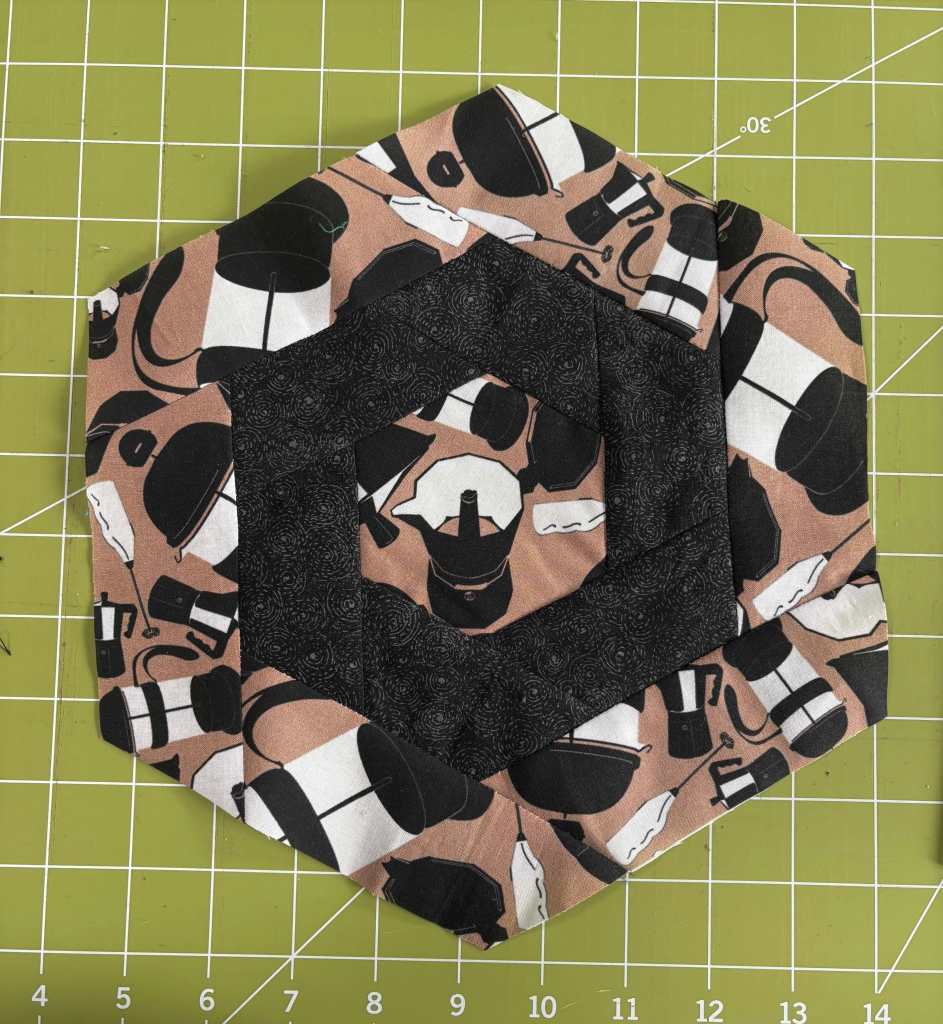
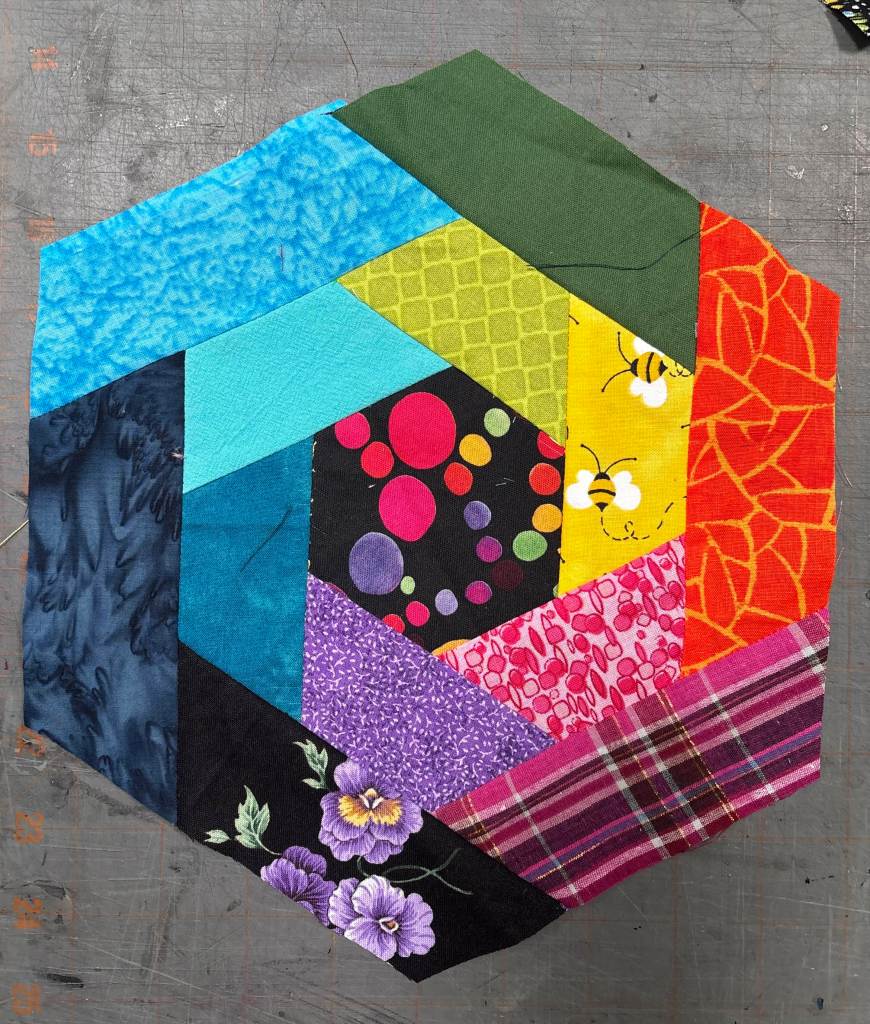
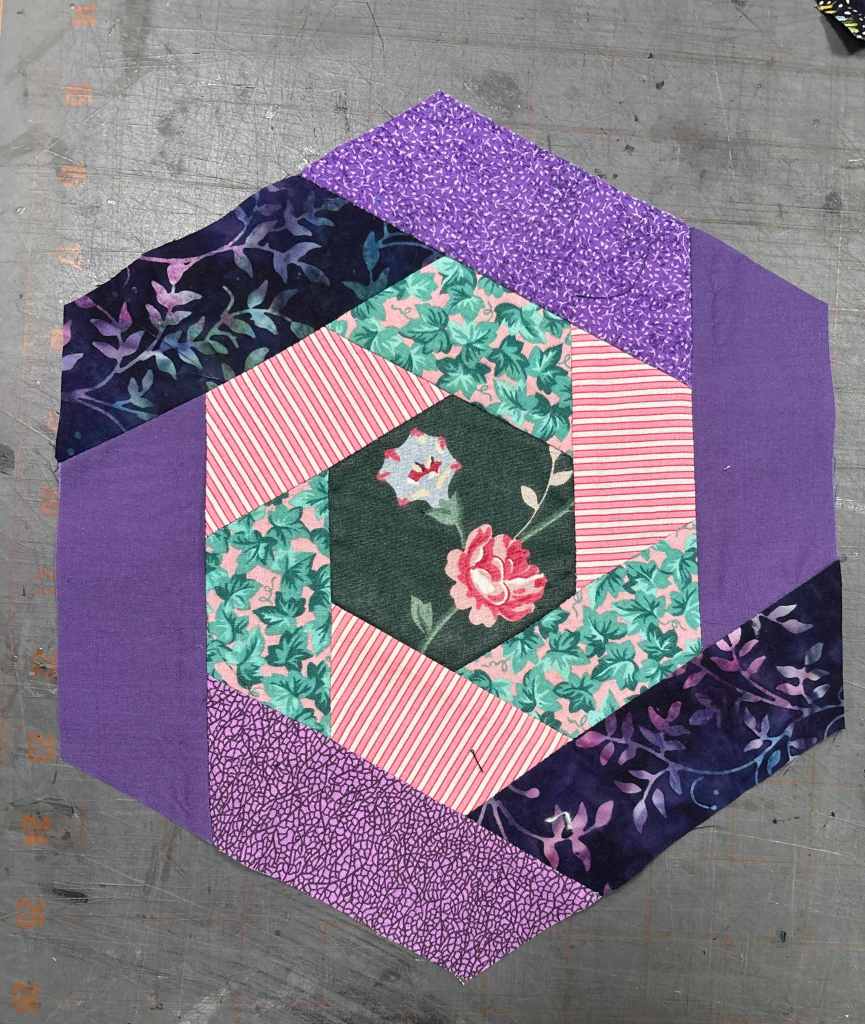
In the meanwhile, here are some snapshots of the first few blocks we made:
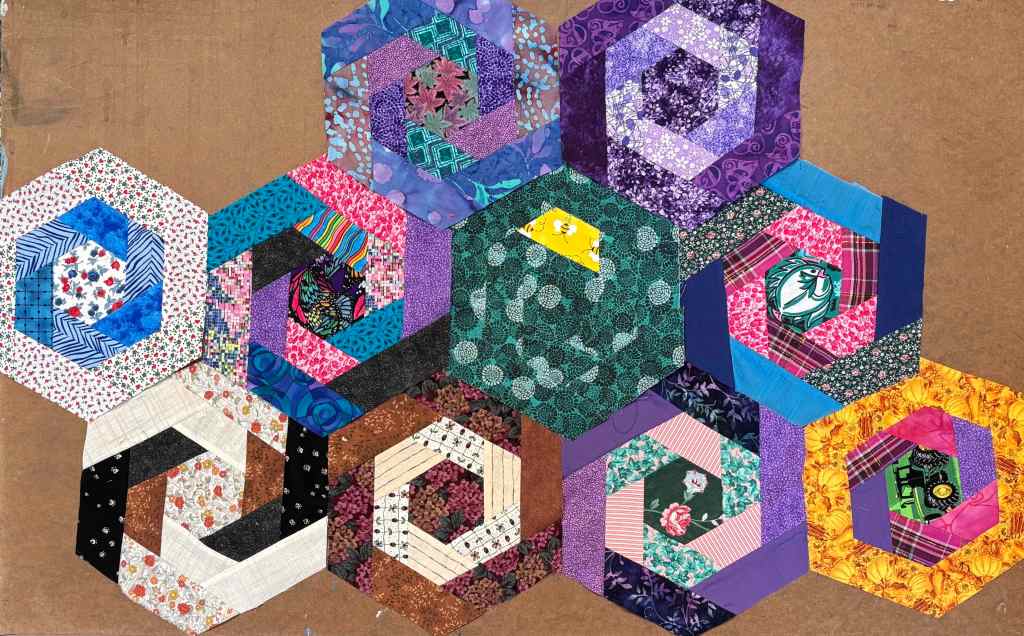
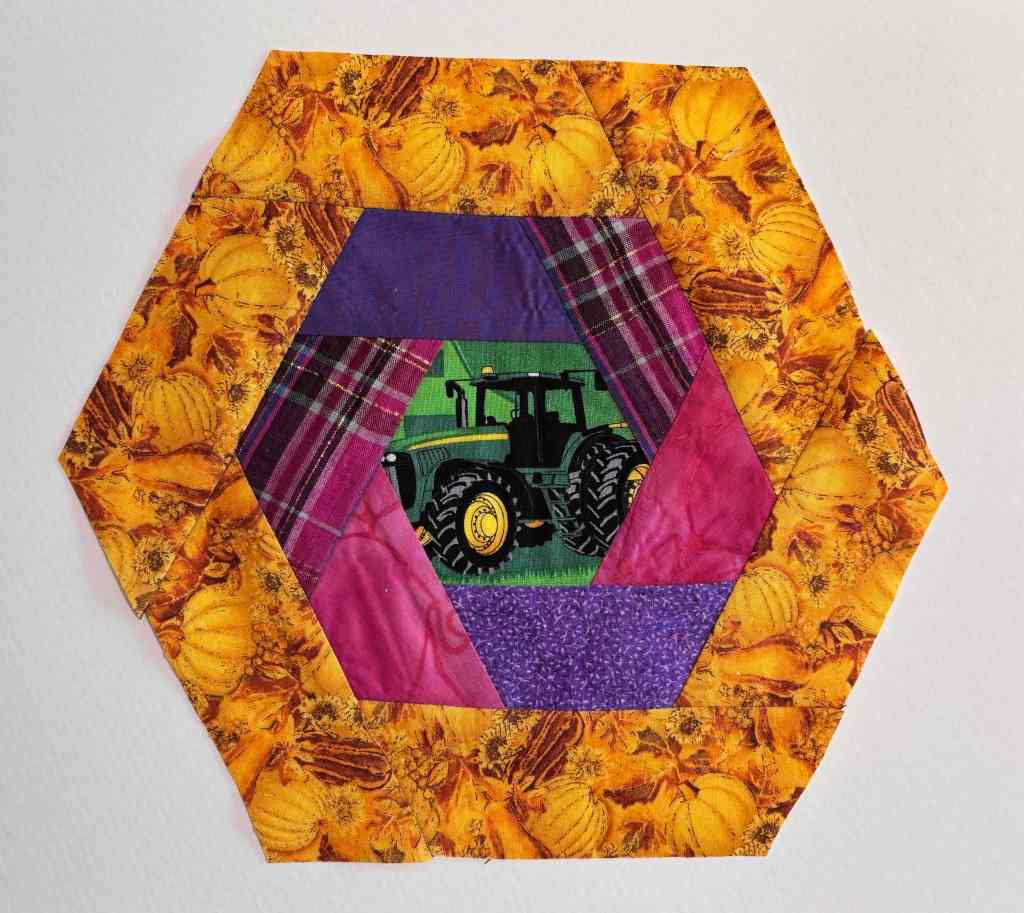
Hexagon quilt block count: 16
Collaborators: 2
 Colleen Wampole