It is the end of January 2025, and the closest I came to decluttering was to sort my tea.
I made a book about it (as one does).
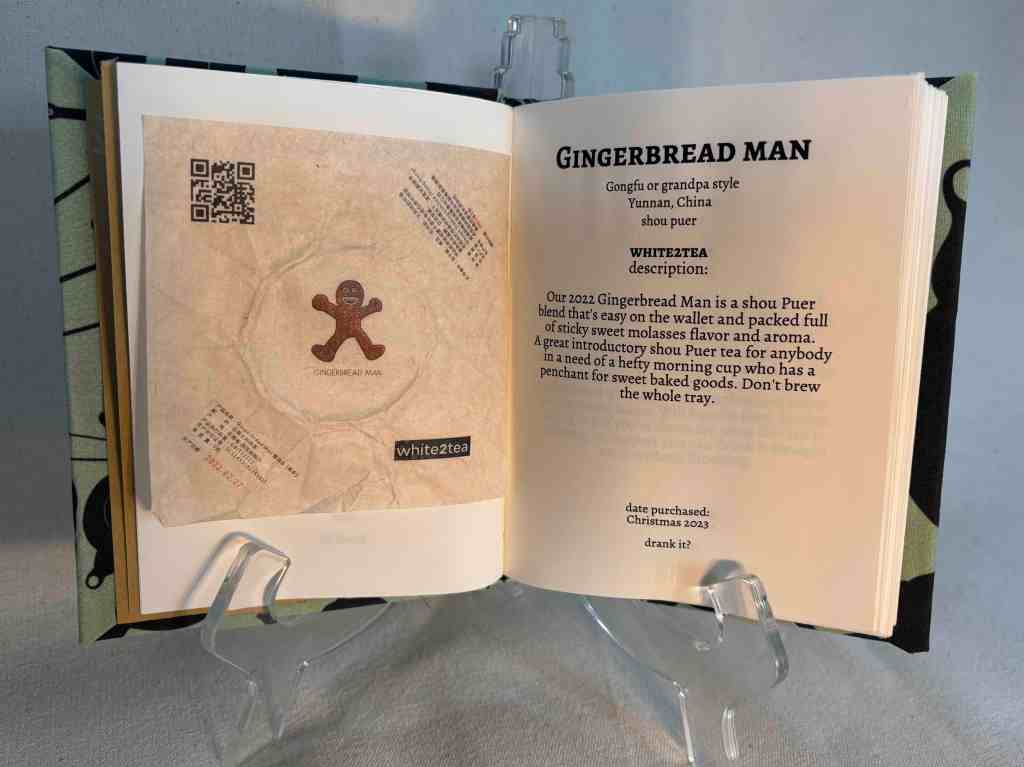
Tea directory book goals:
- revisit recurring themes in my art
- treat the domestic/quotidian as worthy of artistic effort (like all that rhopography in still life painting I did back in the day)
- inhabit the role of artist-as-curator or artist-as-citizen-scientist
- learn about what I prefer in tea (and how that relates to retailers’ jargon)
- stretch goal: finally understand the difference between shou and sheng puer
- force myself to understand just how much tea I already have
- decrease my chances of missing out on a tea that aged too long
- establish a permanent storage space for the neat tea wrappers I otherwise hoard in a spare tin
- identify the origins of the teas I drink
- use some of the patterned fabric I designed and printed years ago
- increase facility with hand-sewn endbands
- increase comfort with typesetting in Affinity Publisher
- experiment with machine-aided debossing to create custom endpapers
What I learned (while making the book):
- Jargon and ingredients
- If a black tea is described as malty, I am more likely to enjoy it than if the description mentions the words floral or fruity.
- Herbal blends are a bit harder for me to predict. Spearmint and peppermint are rarely ingredients that add to my enjoyment of a tea.
- Where it’s from
- Almost all of my tea comes from east Asia.
- I own almost no black tea from India, but that is because Assam tea tends to suit me so well that I constantly run out of it.
- Why do the retailers I currently favor offer so little tea from Africa? It is entirely reasonable for importers to specialize, so where should I look for folks importing good tea from African countries? I have a little tea from Malawi and Kenya, but this is not enough to make informed decisions.
- Room for bookbinding improvement
- I need to leave a bit more slack in the bookcloth to prevent it from pulling the covers open as it rests
- Waxing the working thread for hand-sewn endbands makes the process less annoying and easier to evenly tension. (This is at least true for silk embroidery floss.)
- Tipped-in inclusions (like these tea wrappers) would probably warp less if I carefully let some of the moisture in the PVA evaporate a bit. It might also be time to test glue sticks for this application.
- I’m not sure whether Affinity Publisher or my printer is the reason why my book has a couple of bonus blank pages in the middle. I can just tip in more tea silliness, but this might be a problem for other projects.
- Don’t forget to design the colophon before printing the book.
- Remember to export the typeset as single rather than facing pages if I am going to use a digital imposer to sort it into foldable signatures.
Process notes and results:
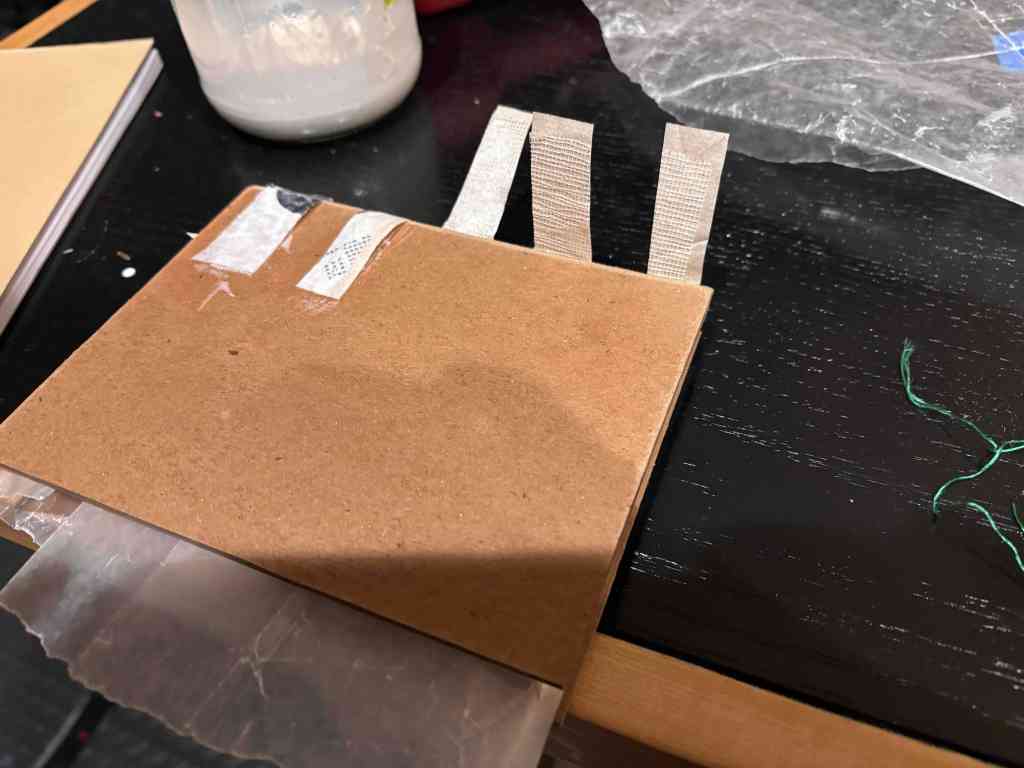
K-118 Binding
I found out about the K-118 binding approach through demonstrations by the Renegade Bookbinding Guild. Information on that approach is also available on this blog post (with more process photos here). All of this is based on a paper titled “The Restoration Rebinding of Speculum Naturale by Vincent of Beauvais, and the Subsequent Development of Several Options for Conservation Rebinding Structures Based on Details Found During the Restoration” by Bruce R. Levy.
I have come to favor this approach to attaching boards to a text block because it allows for a book with a very flexible spine that is nevertheless strongly attached to the cover boards. Endpapers are also easier to tip in with this approach.
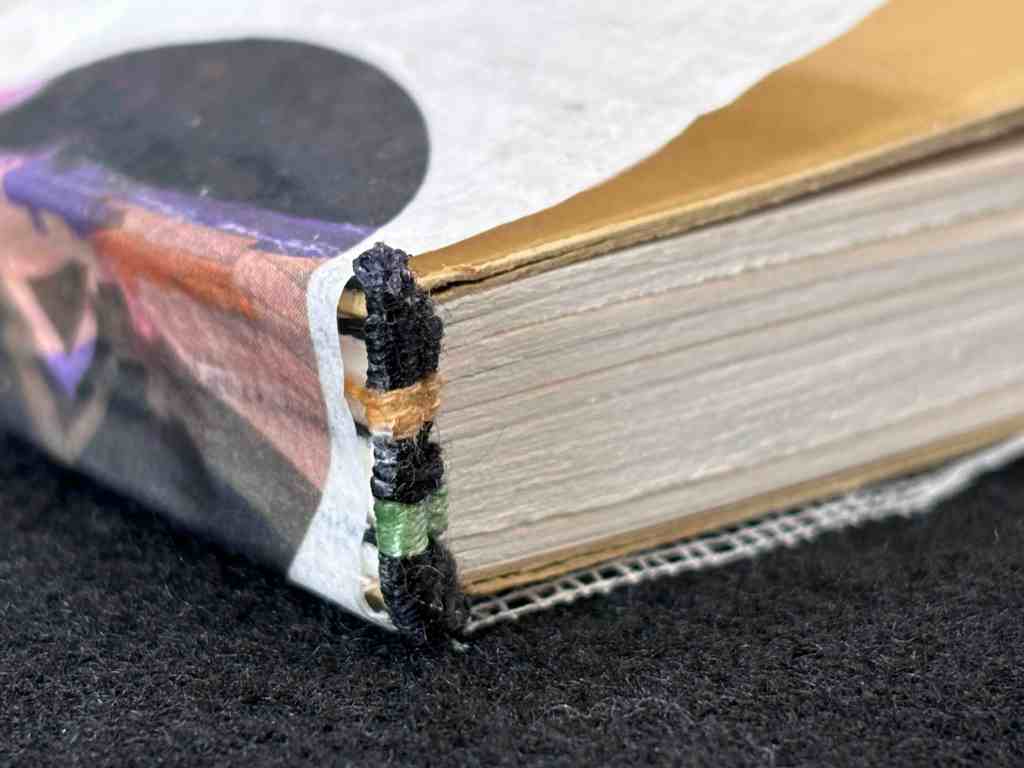
This book features hand-sewn endbands. I wanted the light brown and green stripes to visually link to the bookcloth and endpapers. You can see in this photo that I reinforced the spine with starched mull and thin paper. The thin paper is actually some of the wrappers around mini balls of puer tea.
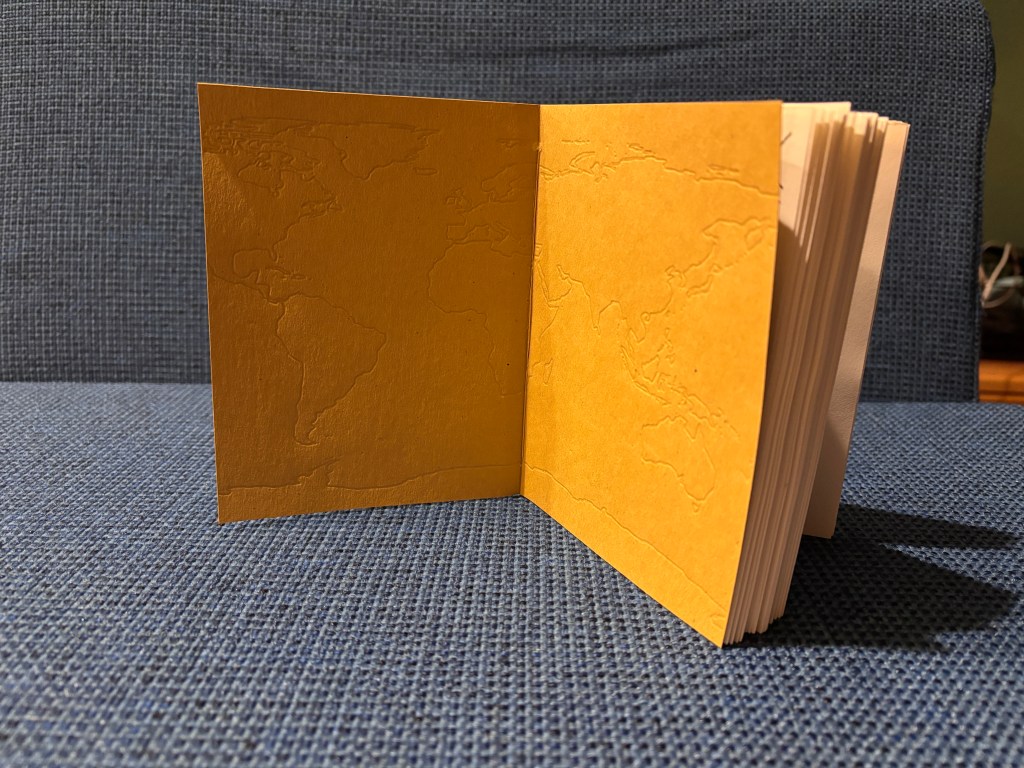
I used a Cricut to emboss a world map into cardstock for this endpaper. There was probably an easier way to generate that world map, but I opted to trace over “Blue Marble” composite satellite imagery by NASA.
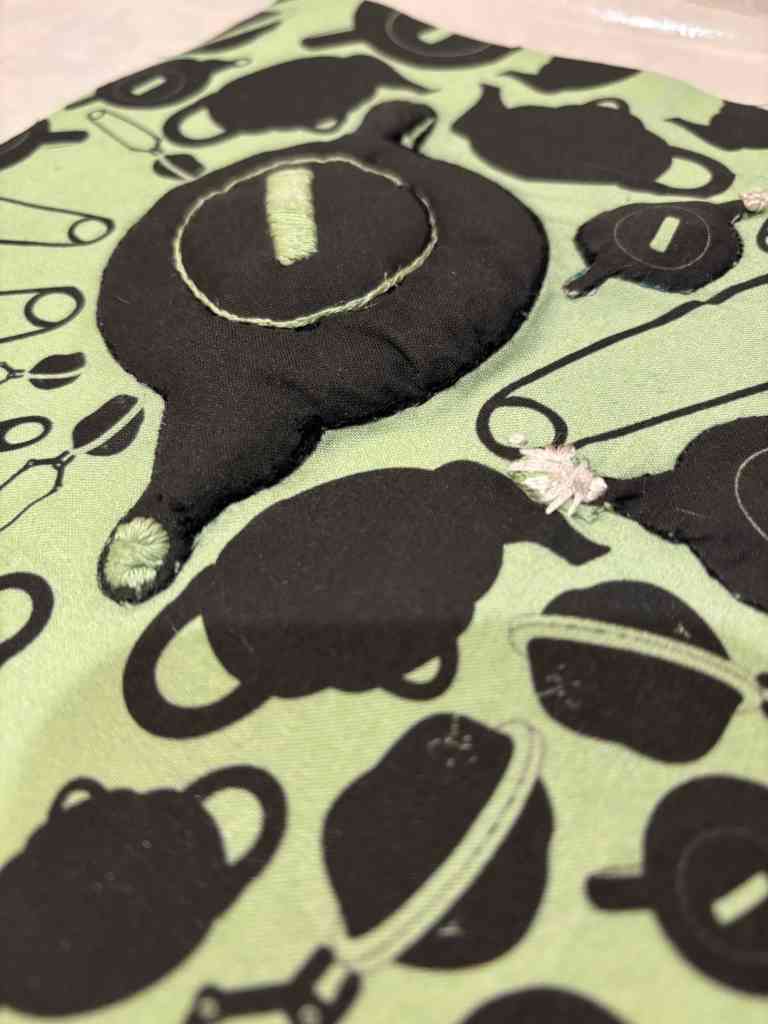
The bookcloth for the cover of this tea directory is a pattern I designed and had printed by Spoonflower. I embroidered it and then used needle-turn applique and trapunto-style stuffing to make a few teapots puff out from the surface. It complicated the rest of the process of attaching this cloth to the book cover (but it was worth it).
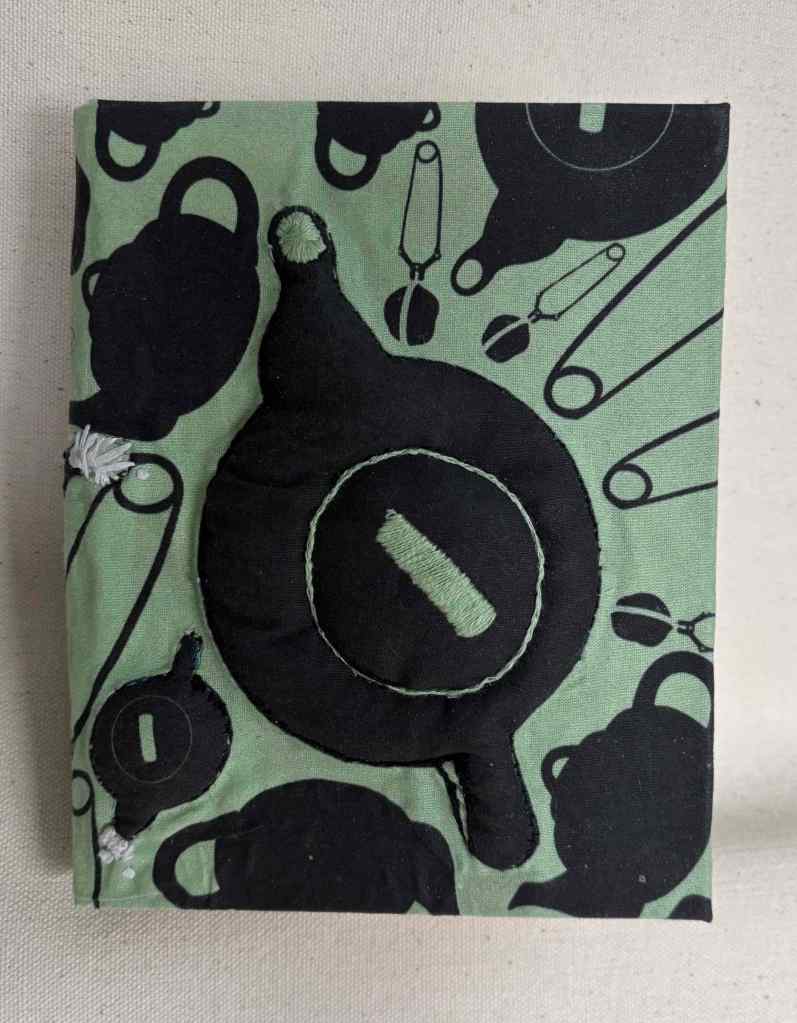
I used iron-on adhesive to adhere tissue paper to the cloth. PVA attaches the resulting homemade bookcloth to the boards. The small wrinkles in the cover were an unfortunate outcome of this process. I speculate that something that dried slower (such wheat paste or a 50:50 wheat paste and PVA blend) might have been the wiser choice for this cover.
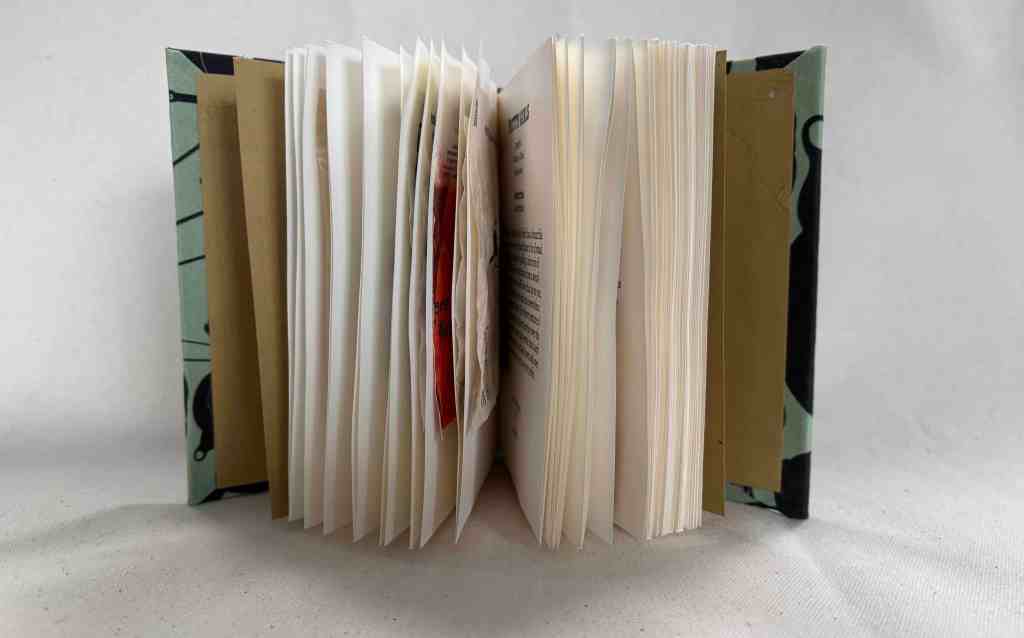
The books exists now! I look forward to taking notes while drinking tea, and hope that doing so will help me focus on the experience.
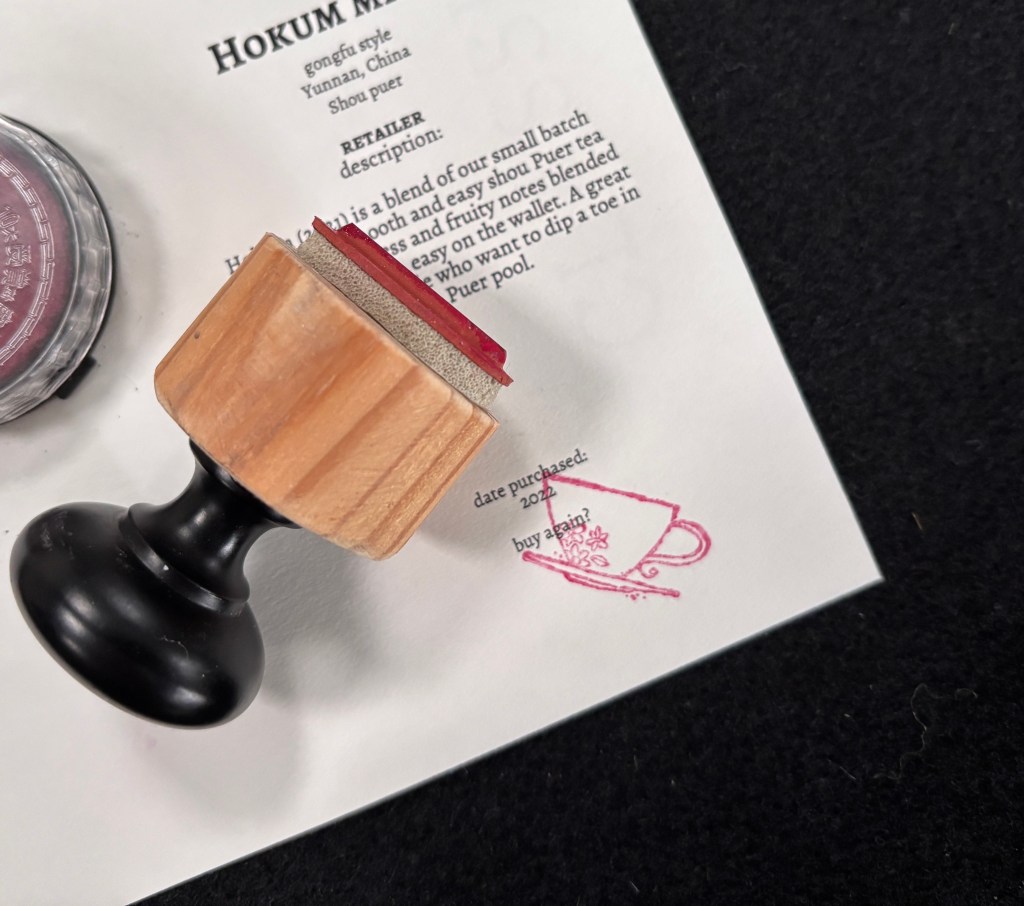
In the spirit of emphasizing enjoyment, I used a drawer knob and a bit of wood to make a comfy handle for this (purchased) stamp. I look forward to stamping teas’ entries once I have fully enjoyed them. (The photo shows a test stamp on an early, mini draft of this tea directory. I wanted to know if the ink would bleed through.)
[Update: I’ve been challenged to make my own stamp for this book. Wish me luck.]
[Another update: I had a go at carving my own stamps for this tea directory. Later, I also made a strap to keep this silly book closed.]
 Colleen Wampole